
What Exactly Is a Bunion?
A bunion (also known as hallux valgus) is a bony bump that forms on the side of your big toe joint. Contrary to what many believe, a bunion is not additional bone, but rather a misalignment of existing bone.
When the big toe starts drifting inward toward the other toes, the metatarsal bone behind it shifts outward, creating that visible bump. Over time, this misalignment can lead to pain, swelling, stiffness, and difficulty finding comfortable shoes.
Why Do Bunions Happen?
Bunions aren’t just “genetic” or caused by tight shoes alone. While footwear can certainly play a role, there are many contributing factors to bunion formation:
✅ Weak foot and toe muscles.
✅ Limited big toe mobility.
✅ Poor gait mechanics, like overpronation or excessive toe-off pressure.
✅ Long-term use of narrow or rigid shoes.
Hypermobility can also be a contributing factor to bunion formation:
In people with hypermobile joints, especially in the first metatarsal joint (the joint at the base of the big toe), there may be excessive movement or instability.
Your body is great at adapting — but sometimes those adaptations create problems over time.
Early Signs to Watch For
Before a bunion becomes painful or visibly prominent, you might notice:
- Your big toe drifting toward your second toe.
- Decreased strength when pushing off through your big toe.
- Calluses or extra pressure under the second toe.
- Shoe discomfort or redness on the side of your big toe joint.
Catching these signs early can help you prevent progression.
How to Address Bunions Without Surgery
Surgery isn’t the only option, in fact, it should be the last option In many cases, improving foot strength and function can slow or even stop bunion progression and help reduce pain.
Here’s where to start:
1️⃣ Strengthen Your Feet & Toes — Exercises that target the small muscles of your feet can help improve alignment and stability.
2️⃣ Restore Big Toe Mobility — Gentle mobilizations can help maintain or regain a healthy range of motion.
3️⃣ Check Your Footwear — Shoes with a wide toe box and minimal structure allow your toes to spread and move naturally.
- Not sure where to start? Our Sole Switch course guides you step-by-step through choosing and transitioning into natural footwear safely, so you can support your bunion recovery without compromising comfort.
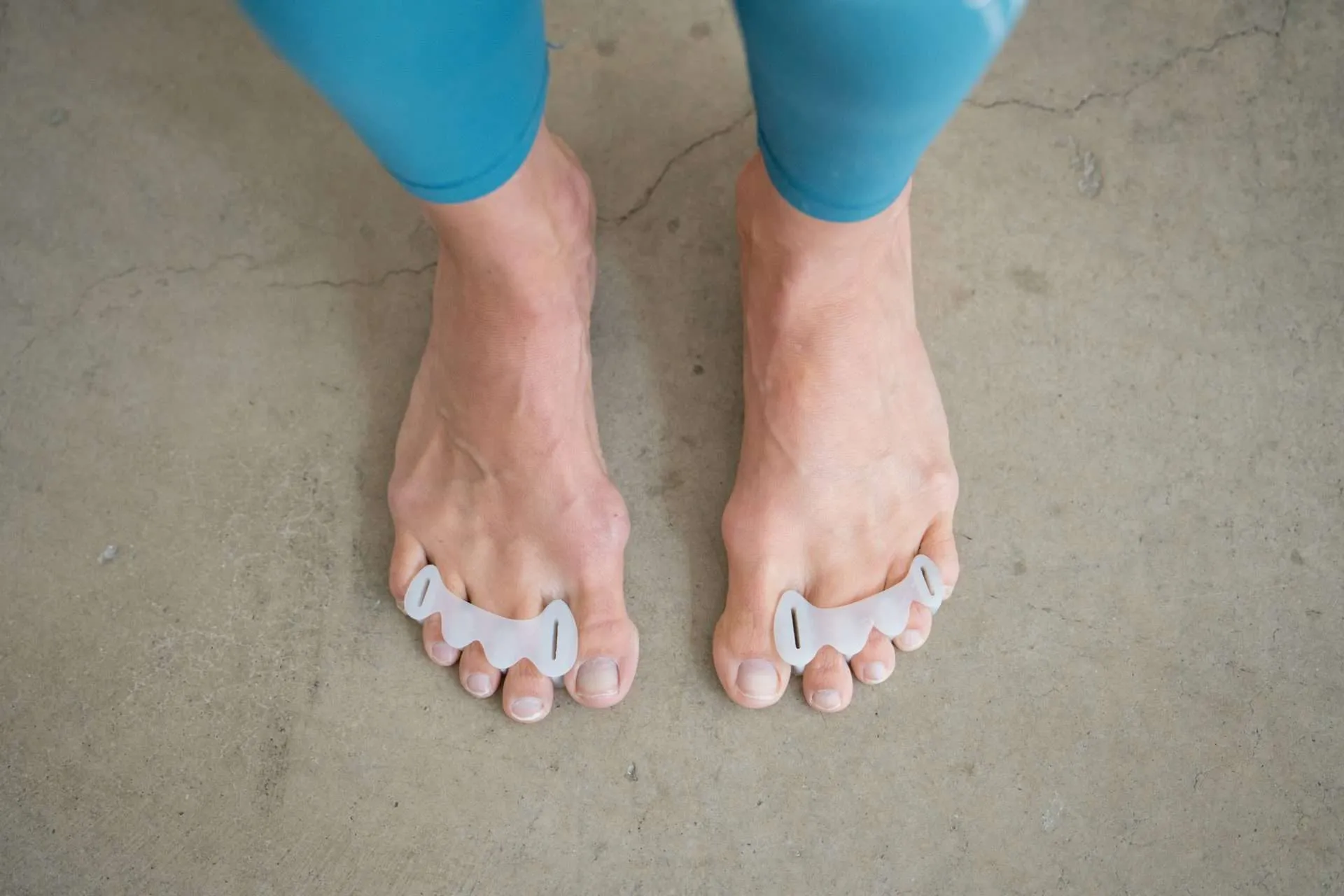
4️⃣ Encourage Better Alignment & Movement – Toe spacers can help retrain your toes to splay and align properly — something many feet lose after years in narrow shoes. They can help support better balance, shock absorption, and muscle engagement of the foot’s intrinsic stabilizers. Our Gait Happens Toe Spacers are designed to be worn on the go in proper footwear and are customizable for a personalized fit.
- Pairing toe spacers with a professional gait assessment from our Gait Happens clinicians can also help uncover movement patterns that may be contributing to bunion formation — so you can get to the root of the issue, not just the symptom.
Need Help? Our Combating Bunions Course
If you’re not sure where to start, our Combating Bunions online course walks you step-by-step through strengthening, mobility, and gait strategies designed specifically for bunions.
You’ll learn:
✔ The root causes of bunions beyond just “bad shoes.”
✔ Exercises to strengthen your toes and restore alignment.
✔ How to safely transition to footwear that supports your feet — not fights them.
✔ Strategies to improve overall foot function and keep you active.
➡️ Learn more about Combating Bunions here.
Final Thoughts
A bunion is more than just a bump — it’s your body telling you something about your foot mechanics. The earlier you address it, the better your chances of staying pain-free and avoiding surgery down the line.
Don’t wait for things to get worse. Start taking steps today to support your feet and move with confidence for years to come.