
Why Does Your Knee Hurt?
Knee pain is a common complaint, but the root cause isn’t always where the pain shows up. One often-overlooked factor? Your ankle mobility.
When your ankle doesn’t move well, your body finds a way to compensate—sometimes in ways that put extra stress on your knee. One of the most common compensations is a varus thrust, a movement pattern where the knee hyperextends during the stance phase of walking.
If you have pain behind your knee, or the knee feels unstable, limited ankle mobility could be playing a role. Here’s how it works and what you can do about it.
What Is a Varus Thrust?
Varus thrust happens when the knee hyperextends due to limited forward movement at the ankle. Instead of the tibia (shin bone) tilting forward as you walk, the knee locks out and shifts sideways, leading to excessive strain on the knee joint.
Your body is great at compensating—if one joint isn’t moving well, another one takes the hit. But over time, these compensations can lead to discomfort and even long-term issues.
Signs That Limited Ankle Mobility Is Affecting Your Knees
If you’re dealing with knee pain, check for other clues that your ankles might be the real culprit:
✅ Early Heel Rise – Your heel lifts off the ground too soon when walking, a sign of restricted ankle dorsiflexion.
✅ Medial Heel Whip – Your heel swings inward as you step forward.
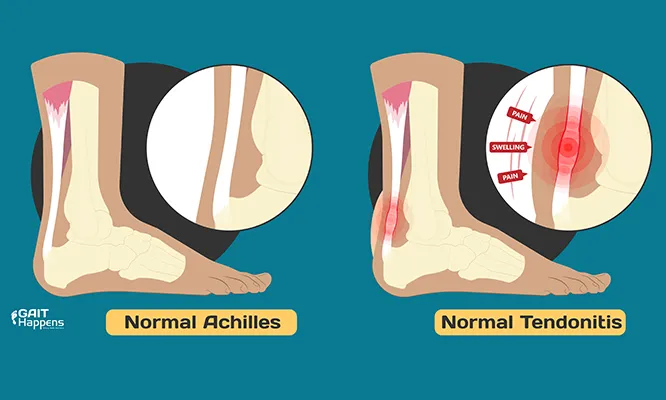
✅ Haglund’s Deformity – A bony bump on the back of your heel, often linked to stiff ankles.
✅ Uneven Shoe Wear – If the inside heel counter of your shoes is breaking down faster, your foot might be compensating for a lack of mobility.
✅ One-Sided Varus Thrust – If the hyperextension is only on one side, check for a possible leg length discrepancy.
How to Improve Ankle Mobility & Reduce Knee Pain
If limited ankle mobility is contributing to your knee pain, improving it can help relieve discomfort and prevent further issues. Here’s where to start:
1️⃣ Assess First – Not everyone needs the same fix. Some people need to stretch their calves, while others need to strengthen their tibialis anterior (the muscle on the front of your shin). A proper assessment can help you determine what you need.
2️⃣ Improve Dorsiflexion Mobility – Try these simple techniques:
- Options for Calf Stretches – Instead of a basic calf stretch, you can try keeping the knee straight or focus on keeping the heel down while bending the knee. Focus on which position causes more tension.
- Foam Roll the Calves – Loosen up tight calf muscles to allow for better movement.
- Banded Joint Mobilization – Use a resistance band to help create more space in the ankle joint.
3️⃣ Strengthen the Right Muscles – Once mobility improves, strength is key to keeping it that way. Try:
- Tibialis Raises – Strengthens the front of the shin to help control foot positioning.
- Controlled Eccentric Calf Raises – Lowering slowly helps improve strength and mobility at the same time.
- Sled Pushes – Encourages strong foot function while reinforcing proper mechanics.
When to Seek Help
If you’re experiencing persistent knee pain, getting a professional gait assessment can provide clarity on the root cause. A trained eye can help determine whether your ankle mobility is the issue—or if something else needs to be addressed.
➡️ Looking for an in-depth assessment? Our team at Gait Happens offers virtual consultations to help you get to the bottom of your knee pain.
➡️ Are you a health professional? Learn to assess and address gait dysfunctions like this with our Gait Certification Course — available in person, online, and hybrid formats.
Final Thoughts
Your knee pain might not be about your knee at all. By improving ankle mobility and addressing movement compensations, you can set yourself up for long-term relief. Start small, be consistent, and don’t ignore the signs your body is giving you!